

Exquisite dishes are crafted by visionary and talented chefs and paired perfectly
with Bollinger champagnes for the ultimate gourmet experiences.
#006 Ginza FujiyamaJapanese Cuisine
-
 The Bollinger ListGinza Fujiyama
The Spirit of Kyoto, Fujiyama-Style Cuisine
Kyoto Cuisine Enjoyed in a Space of Refined Creativity
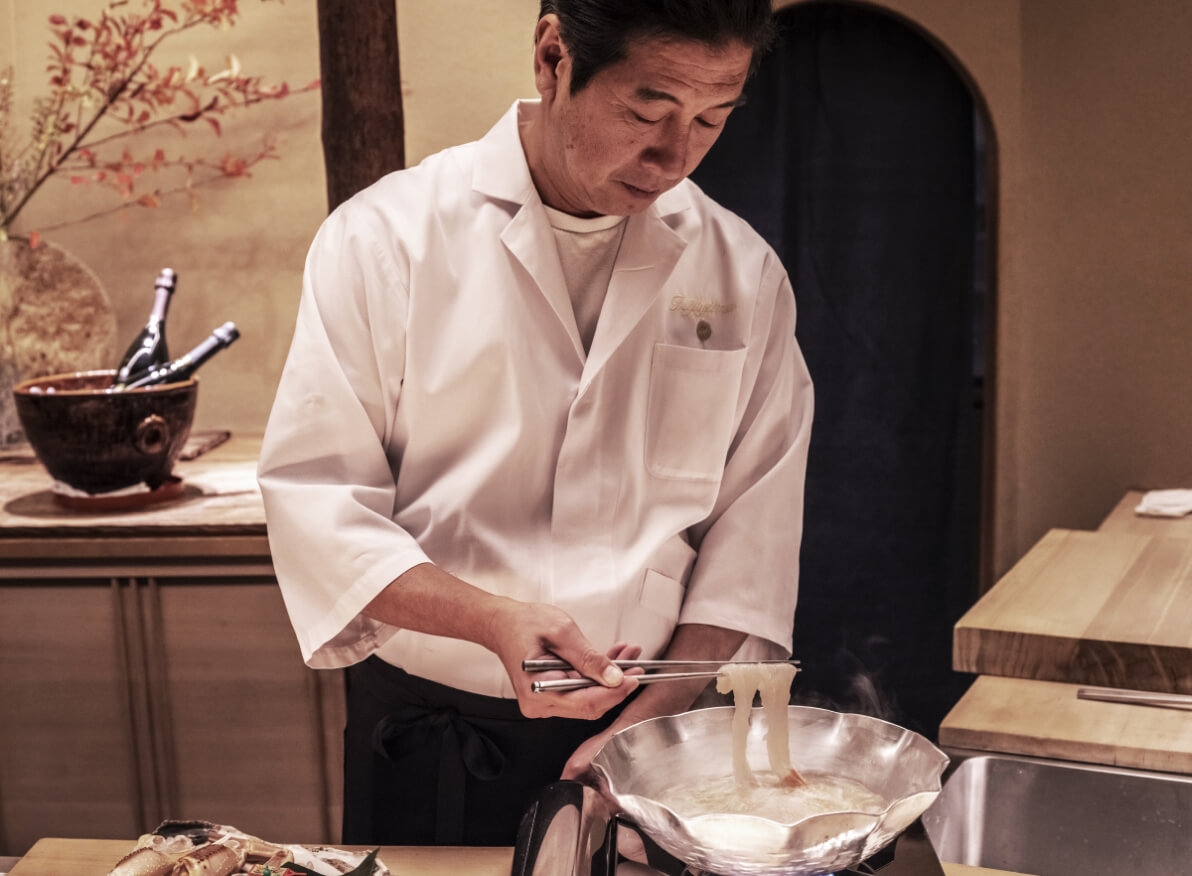
The moment you step into Ginza Fujiyama, you find yourself completely isolated from the bustle of the outside world. It may be more accurate to say that the founder’s aesthetic sensibility has been distilled into this space. Calm, gentle, yet filled with a subtle tension, the atmosphere is serene and refined. There is also a certain thrill reminiscent of a secret hideaway, perhaps alluding from the tea-house-like design that evokes a sense of retreat and intimacy. Owner-chef Takaaki Fujiyama is a true legend, having become executive chef of a prestigious Kyoto restaurant at a remarkably young age. Having hosted the most distinguished guests across various fields, he is well versed in all aspects of Japanese culture and possesses an exceptional eye for discerning quality, in addition to his culinary mastery. “I was born in Kyoto and trained as a chef there too,” he says. “This was very fortunate. Through my training, I was given the opportunity to cultivate an eye for identifying and understanding the finest things.”
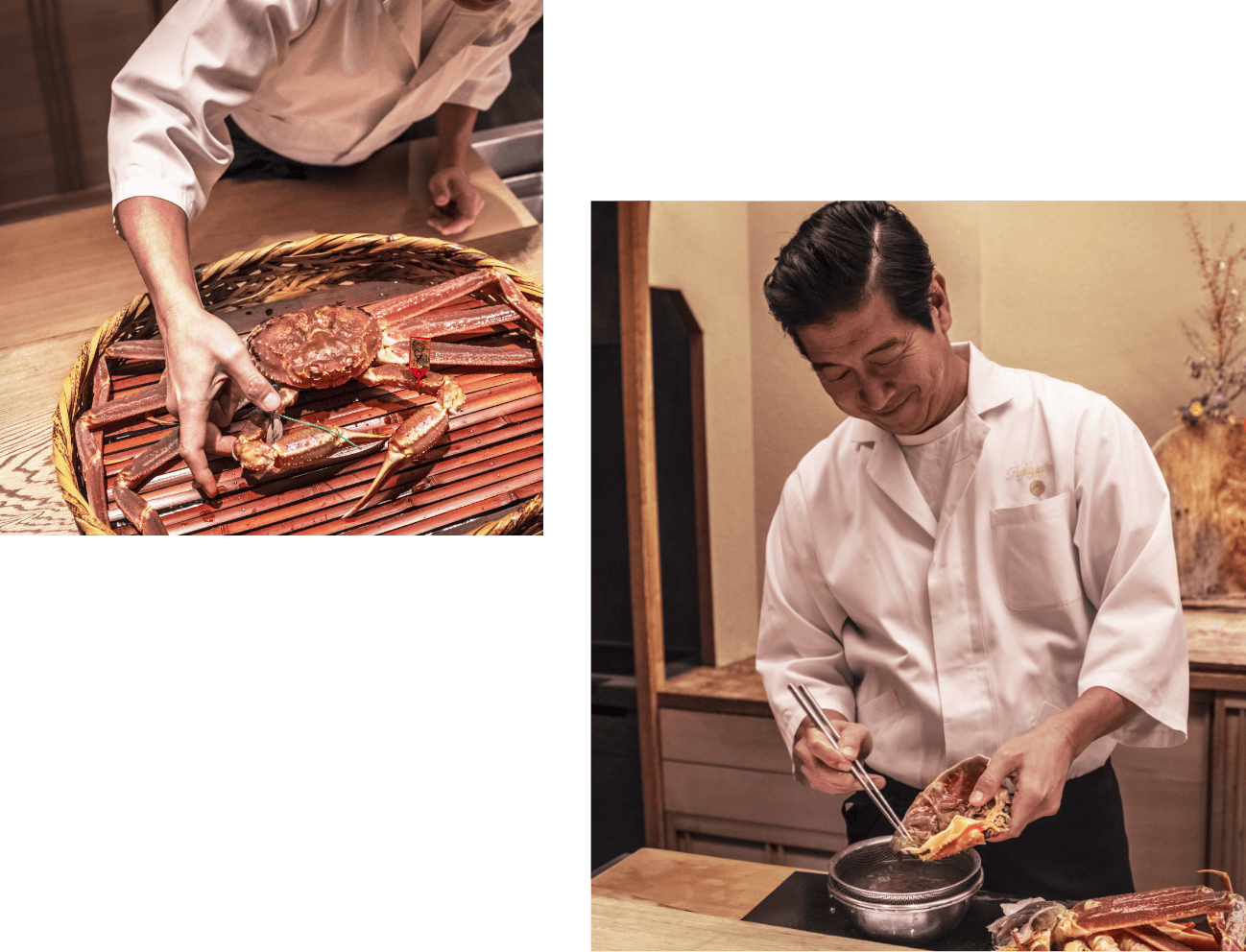
The excellence of Fujiyama’s cuisine is already widely praised by gourmets. At its foundation is the discerning approach to ingredients, applying the same trained eye for not only star ingredients such as crab and fish, but also for a single stalk of scallion, with equal seriousness. Even the water used at the restaurant is sourced from Kyoto.
Another pillar supporting Fujiyama’s charm is the interior, crafted with the same meticulous vision applied to ingredients. The setting is refined and elegant, evoking the spirit of the old capital, but it is not simply “a Kyoto-like space.” The materials range from traditional Japanese reclaimed wood and earthen walls, to Western timber and antique tiles. Each element was personally selected by Chef Fujiyama.
The floor pillar is made from a lacquer tree that once grew deep in the mountains of Tango. The wood was salvaged from the home of a lacquer craftsman living a hermit-like life. The trunk still bears numerous marks from years of lacquer tapping. Gazing upon it evokes the patient, meticulous labors of mountain dwellers. Throughout the restaurant are furnishings and objects filled with stories, such as the benches renovated from old bridge timbers, and stones gathered from riverbanks near visited production sites. Through these elements, one comes to realize that Fujiyama himself is an extraordinary storyteller and presenter.
The same philosophy applies to Ginza Fujiyama’s cuisine. Ingredients gathered through Chef Fujiyama’s discerning eye are carefully interpreted through refined technique, guiding diners into a world that transcends time and place. The sensibilities cultivated in Kyoto, enhanced by his originality, composes Chef Fujiyama’s aesthetic sense that creates an atmosphere of ’Suki’ or elegant pursuits. In this sense, Bollinger too becomes one of the materials unraveled within this captivating space. ‘Suki’ means to yearn deeply for something and to pursue it wholeheartedly. Just as Chef Fujiyama painstakingly selects each ingredient and material to build his world, Bollinger shares this same philosophy in Champagne-making. Champagne, like cuisine, is a continuous series of deliberate choices, from choosing which vineyard, which grape variety, which barrels, and how long to age.
From a Single Crab,
a Brilliant Bloom of Flavors
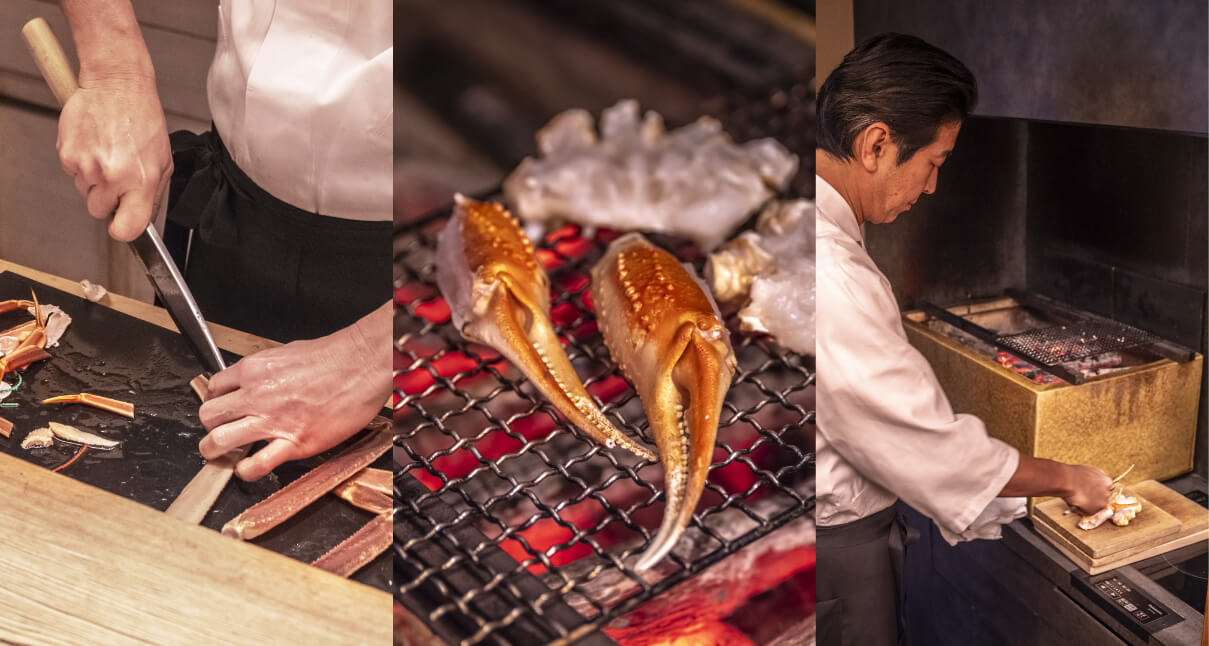
The ingredients used at Fujiyama are the result of relationships built by Chef Fujiyama through personal visits to artisans, producers, and brokers. Among them, his devotion to crab, one of winter’s greatest treasures, is particularly profound. Today, the crab served was Matsuba crab from Taiza, Kyoto, and only the very top grade among the more than twenty market classifications is used at Fujiyama.
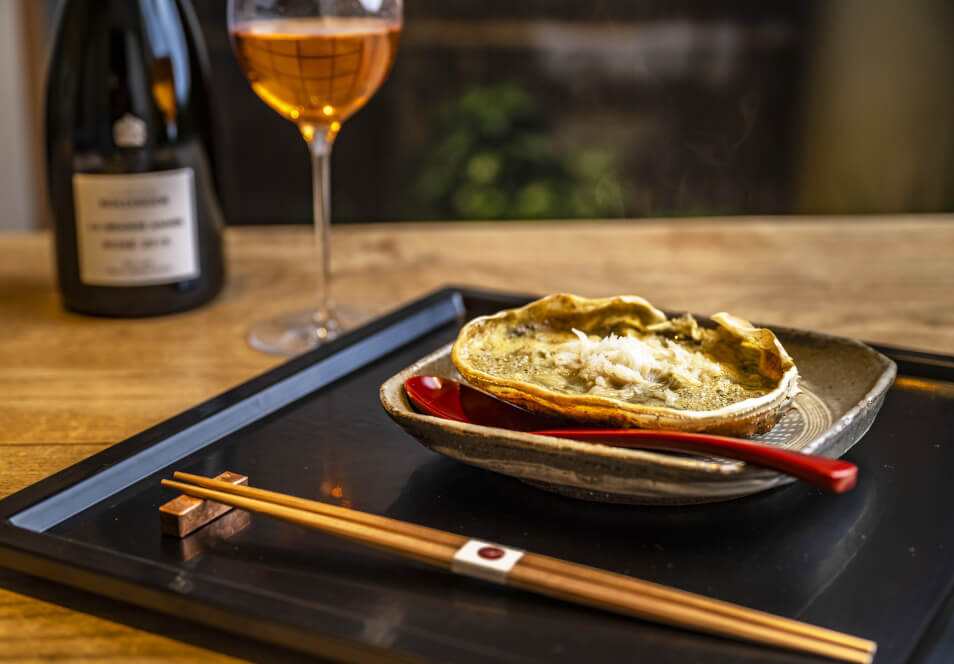
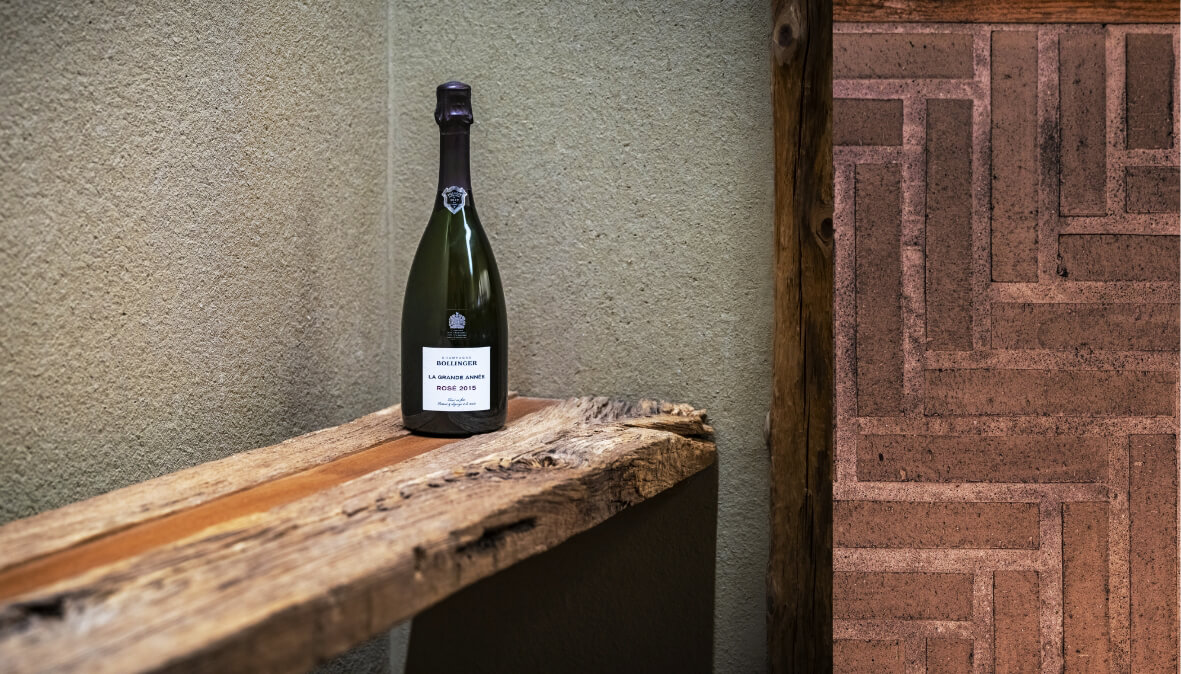
When fresh Taiza crab is lightly rinsed in water and ice, the flesh opens like a blooming flower, offering a texture reminiscent of fresh fruit. Because of its delicacy, no vinegar is used, but instead, it is enjoyed with crab broth gently infused with yuzu aroma. Alternatively, pairing it with Bollinger La Grande Année Rosé creates an excellent harmony. The Pinot Noir’s subtle, strawberry-like depth accompanies the crab, gently becoming part of its flavor.
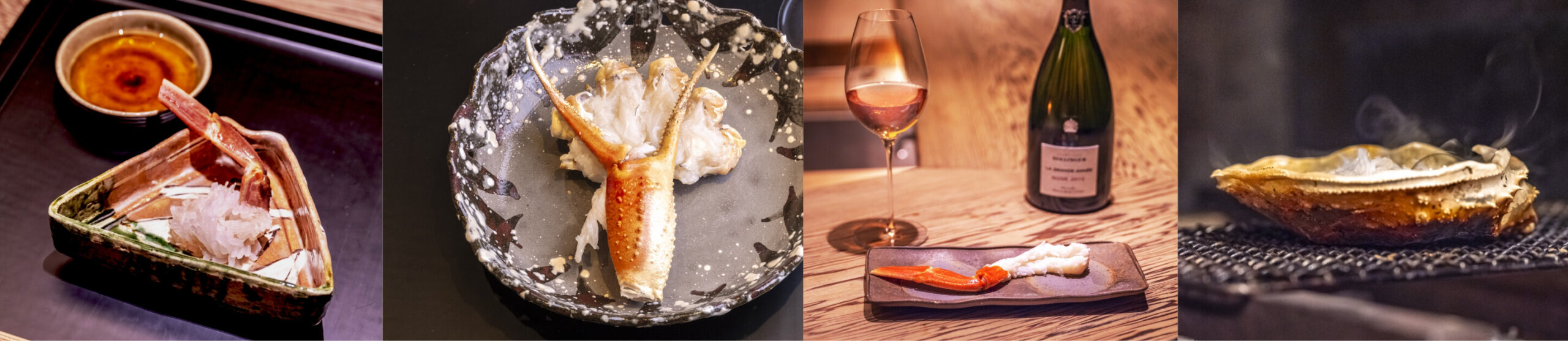
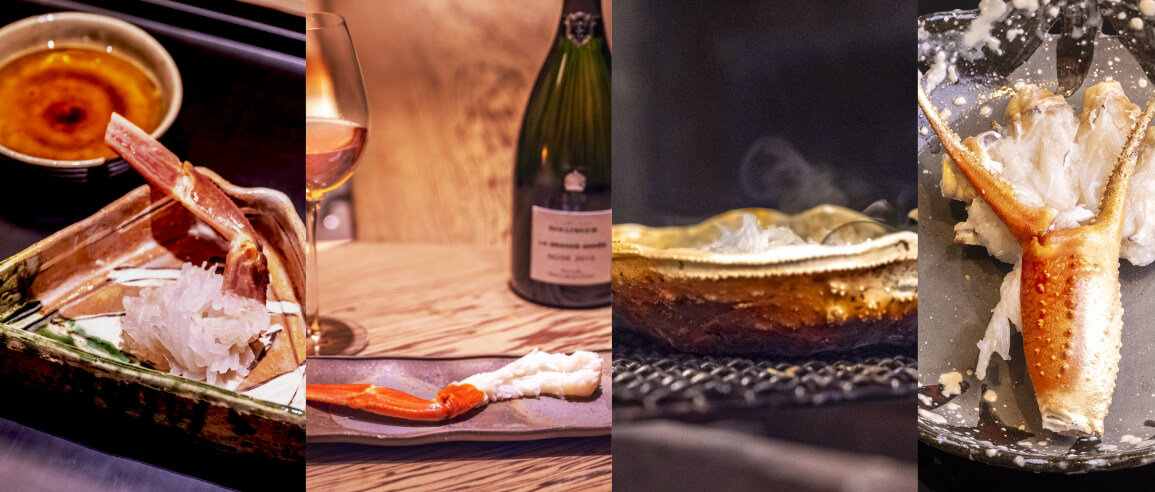
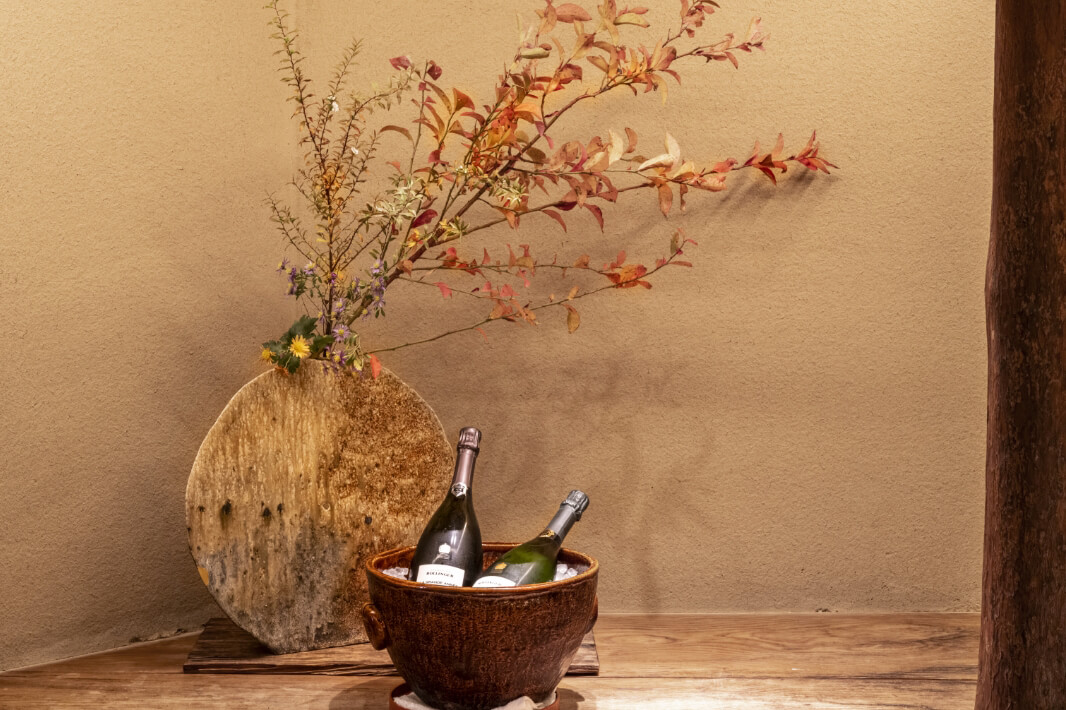
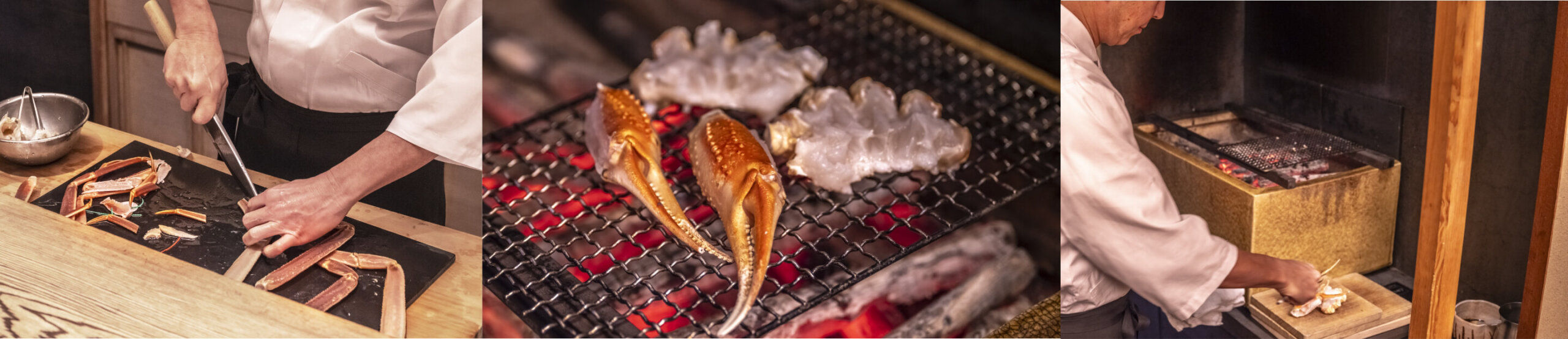
Charcoal-grilled crab is best enjoyed without any condiments, savoring the essence of the ocean. The marine minerality of the crab and the aroma of charcoal intertwine with rosé champagne’s subtle red-grape polyphenols that resemble rhubarb, alongside the toastiness of oak.
Crab briefly dipped in hot crab broth (shabu-shabu) offers yet another sensual texture. The flesh unravels like silk threads, intertwining with the fine bubbles of Bollinger La Grande Année Rosé on the palate, an exquisite demonstration of a rosé’s brilliance as a wine for the table.
For kōra-yaki, the crab shell becomes a small pot in which rich crab roe is gently warmed. The complex, layered flavors of the rosé envelop the intensity of the miso, enticing the diner toward the next bite. Adding rice at the end transforms it into a luxurious “sea risotto.”
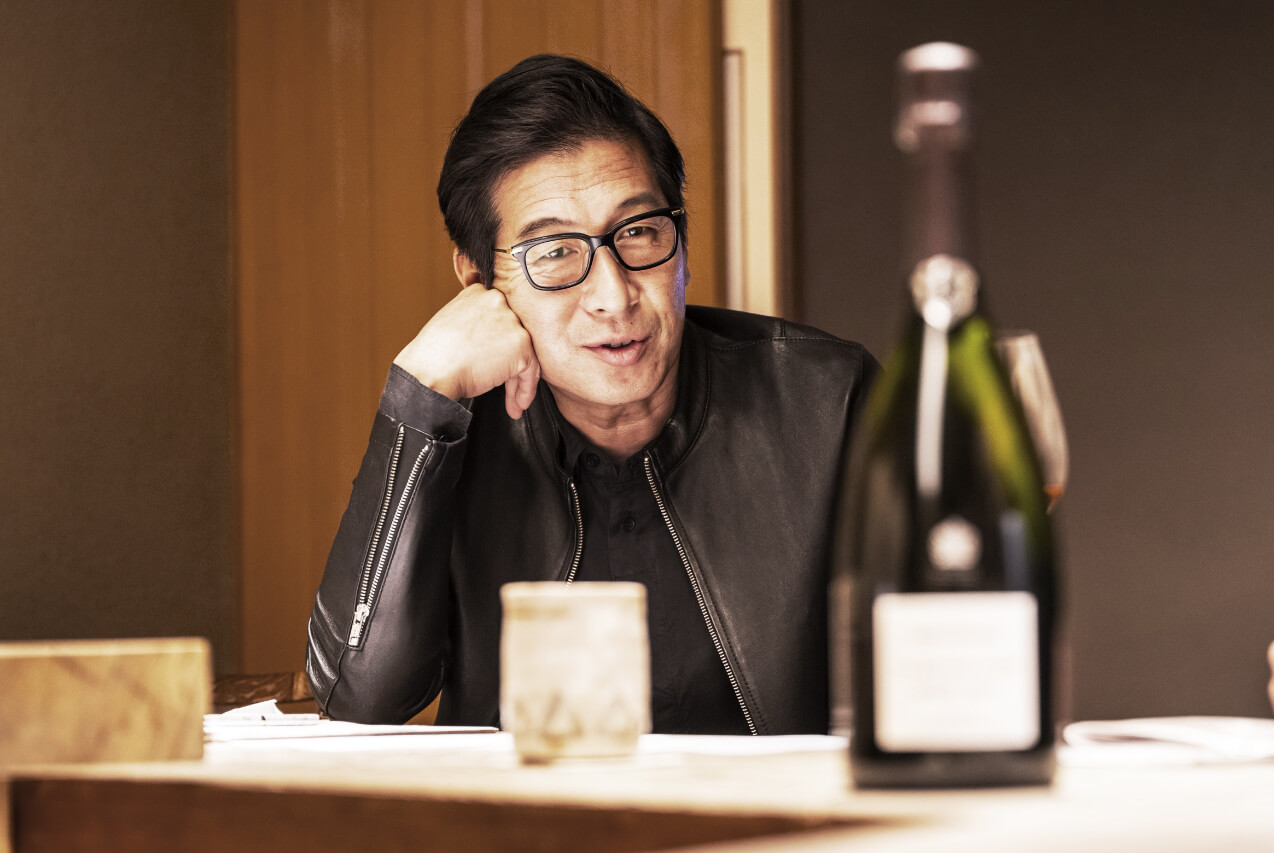
Bollinger and I …
One crab, and a bottle of Bollinger La Grande Année Rosé 2015. What might appear to be a simple one-to-one pairing instead unfolds into a dynamic marriage, with new expressions emerging with each dish.
“My commitment to crab is ultimately a commitment to people,” says Chef Fujiyama. It’s because that fisherman caught it, because it comes from that wholesaler, because he is the one handling it—those relationships are what make me want to serve this crab, right here and now.” Bollinger Champagne is the same. Champagne Bollinger is a master of Pinot Noir, the finest of grape varieties, and La Grande Année Rosé includes those red wine elements. Because they sincerely face what they value most, this flavor exists. That is why it’s a Champagne I want to serve here. The harmony between crab and rosé Champagne is truly exceptional. Sometimes leaning in, sometimes enveloping, sometimes elevating one another. I was completely captivated by its many expressions.” The look of pure delight on the face of Chef Fujiyama, a man blessed with a truly rare discerning eye, left a lasting impression.
| Address |
7F, 3-3-6 Ginza, Chuo-ku, Tokyo 104-0061 |
||||
|---|---|---|---|---|---|
| Contact | TEL: 03-6263-2435 |
||||
| Opening Hours |
|
Ginza Fujiyama is a Japanese restaurant led by a chef who refined his craft over many years at a renowned Kyoto establishment. Using carefully selected seasonal ingredients, each dish expresses delicacy and depth, supported by traditional techniques. The restaurant is a refined space in harmony with its meticulous cuisine, quietly elevating every moment and offering an irreplaceable dining experience. In the heart of Ginza, guests are invited to savor the true essence and profound beauty of Japanese cuisine.
Champagne Bollinger obtains
B Corp certification.
Maison Bollinger obtained B Corp certification, an international certification which represents high standards in terms of social, societal, and environmental performance and it allows us to join a community of businesses who are committed to the ambitious development of these values., Maison Bollinger maintains its ongoing commitment to People, to the Land, and to its Roots as well as our continued efforts towards further progress.